Ethiopia: Tumaas nang Sampung Beses ang Produksyon ng Patatas Mula Noong 2000, 4.09 Milyong Tonelada
Key takeaways
- 4.09 Mt of potatoes produced in Ethiopia in 2024 (FAOSTAT)
- 10x growth in output since 2000, from 385,000 tonnes
- 12.3 tonelada/ektarya na karaniwang ani noong 2024, mula sa 7.7 tonelada/ektarya noong 2000
- 30-40% of the crop is estimated to be lost after harvest
Bakit mahalaga ito
- Para sa mga magsasaka
- Cut losses before expanding: invest in simple ventilated storage, since an estimated 30-40% of the crop is lost after harvest.
- Para sa mga processor
- Study sourcing in Oromia and Amhara; 4.09 Mt of raw material exists, but consistent quality needs storage partners.
- Para sa mga supplier
- Offer seed and storage solutions; yields of 12.3 t/ha and losses of 30-40% are the two largest gaps.
- Para sa mga namumuhunan
- Screen cold-storage and seed projects under the 2024-2030 national potato strategy; volume is already there.
60 segundong buod
Ethiopia has quietly become one of the big potato producers of Africa, but it captures only part of the value. The FAO series shows about 4.1 million tonnes in 2024, more than ten times the volume of 2000, which places the country third on the continent after Egypt and Algeria. Productivity has improved from 7.7 to about 12.3 tonnes per hectare, still far below the 30 to 38 t/ha typical of Egypt and South Africa. A Dutch government sector report adds context: roughly 332,000 hectares planted, per capita intake of only 7 to 8 kg, and post-harvest losses estimated at 30 to 40%. Cold storage, seed systems and processing are therefore where money can make the quickest difference, and a national potato strategy running to 2030 provides the policy frame. Caveat: all volume figures rest on FAOSTAT only, and no independent national survey number could be checked.
Ethiopia produced 4.09 million tonnes of potatoes in 2024, according to FAOSTAT data published by Our World in Data. In 2000, output was only 385,000 tonnes. Production has grown more than tenfold in 24 years. In 2014 it was 1.61 million tonnes.
A May 2026 sector report on the Dutch government portal Agroberichten Buitenland uses the same FAOSTAT basis. It puts the 2024 harvest at about 4.1 million tonnes from an estimated 332,000 hectares. In the early 1990s, production was below 300,000 tonnes per year, the report says.
Yields improved, but remain low
The FAOSTAT average yield rose from 7.7 t/ha in 2000 to 12.3 t/ha in 2024. It peaked at 12.8 t/ha in 2023. The Dutch report estimates yields at roughly 12–15 t/ha. Commercial European systems frequently exceed 40 t/ha, it notes.
Mga araw ng trabaho. Mag-unsubscribe sa isang click lang.
Growth has come from both more land and better yields. According to the report, more than 70% of arable land is agro-ecologically suitable for potatoes, especially above 1,500 metres. Production is concentrated in these regions: Oromia, Amhara, Sidama, Southern Ethiopia and Tigray.
Weak links after the harvest
Consumption is still modest. The report estimates it at about 7–8 kg per person per year. Post-harvest losses remain high, at an estimated 30–40%. Storage and processing are therefore key constraints. The government has adopted a National Potato and Sweet Potato Development Strategy for 2024–2030.
Third in Africa
In 2024, only two African countries produced more potatoes, according to FAOSTAT: Egypt with 8.08 million tonnes and Algeria with 4.60 million tonnes. Ethiopia is ahead of South Africa (2.62 million tonnes), Morocco (2.19 million tonnes) and Kenya (2.19 million tonnes). Its yield, however, is far lower than in Egypt (30.1 t/ha) or South Africa (38.0 t/ha).
Bakit mahalaga ito
Ethiopia has become a major potato producer by volume. Yet low yields, low consumption and high losses mean much of the potential value is lost. If losses of 30–40% apply to 4 million tonnes, more than 1 million tonnes may never reach consumers.
Seed, cold storage and processing are the gaps where investment can have the fastest effect. The national strategy to 2030 gives a policy frame for such projects.
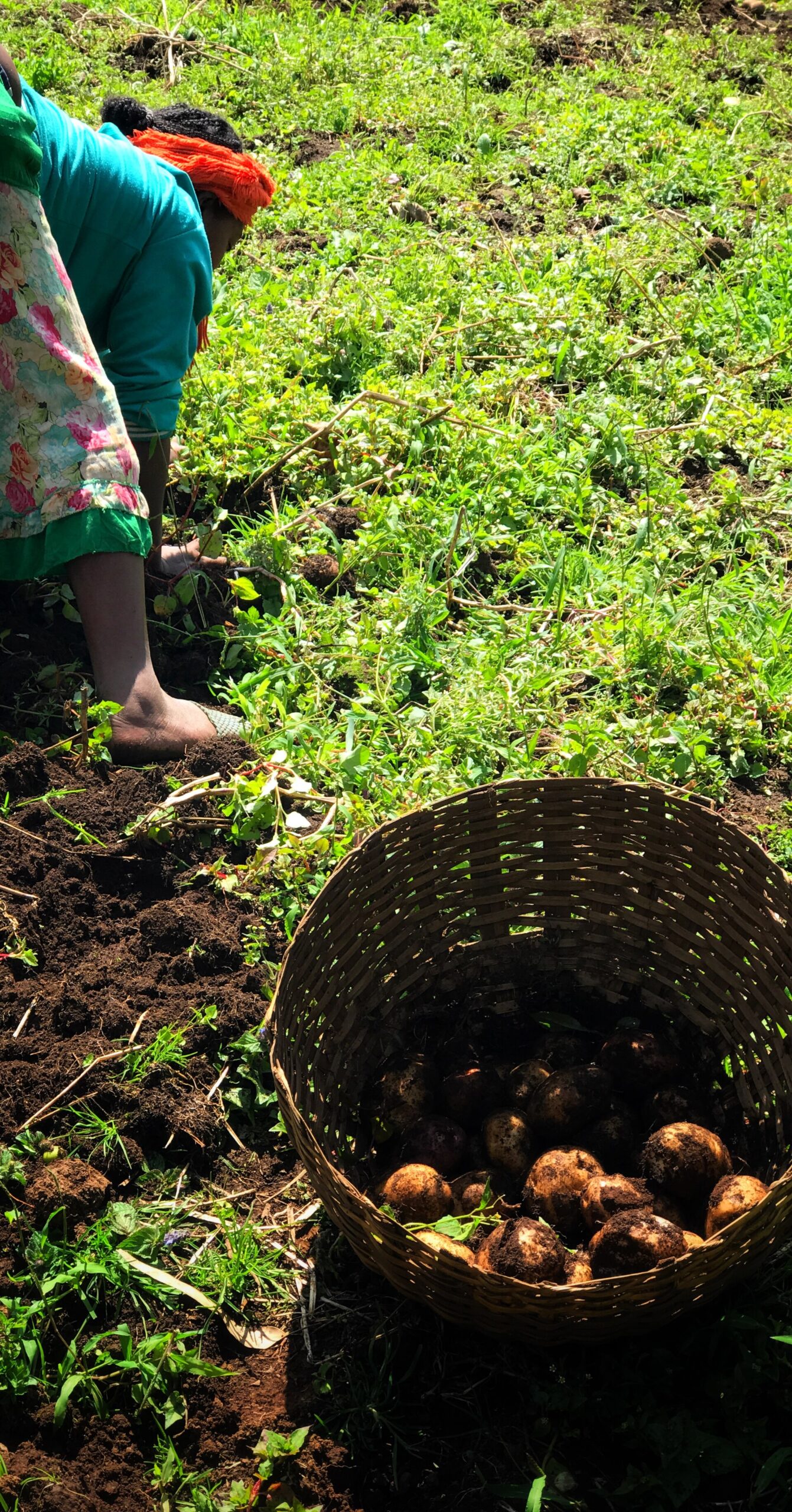
Photo: Potato picking (illustrative). Leilena Tekle / Wikimedia Commons, CC BY-SA 4.0
Pandaigdigang Maikling Balita tungkol sa Patatas
Nangungunang limang kuwento, presyo, alerto sa sakit at mga kaganapan. Umaga ng mga araw ng linggo, walang patalastas.
Anong sunod
The national potato and sweet potato strategy runs to 2030. The texts do not give production targets or new FAOSTAT data for 2025.
Pinagmumulan ng
- FAOSTAT sa pamamagitan ng Our World in Data, Produksyon ng Patatas — https://ourworldindata.org/grapher/potato-production
- Agroberichten Buitenland (Ministerie van LVVN), 13.05.2026 — https://www.agroberichtenbuitenland.nl/actueel/nieuws/2026/05/13/unlocking-ethiopias-potato-sector-growth-constraints-and-strategic-opportunities
- FAOSTAT sa pamamagitan ng Our World in Data, Mga ani ng patatas — https://ourworldindata.org/grapher/potato-yields
- ОДИН ИСТОЧНИК
Naka-link sa materyal na ito
- bansa
- Etyopya
- Seksyon
- AprikaAgronomyaBalitaMga kwadra
Kaugnay na mga kuwento
Morocco: Dumoble ang Produksyon ng Patatas sa 2.19 Milyong Tonelada Simula noong 2000 Dahil Umabot sa 32.8 tonelada/ha ang Ani
Algeria: Inaangkat Arizona Ang Halaga ng Patatas na Binhi ay Hanggang 4 na Beses kaysa sa Lokal na Binhi