Uzbekistan: Potato Output Grows Fivefold to 3.72 Million Tonnes, but Imports Remain

Key takeaways
- 3.72 Mt of potatoes produced in Uzbekistan in 2024 (FAO)
- 5x growth in output since 2000, from 0.73 million tonnes
- 29.8 t/ha average yield, highest among Central Asian peers
- 94,000 t of potatoes imported to fill a seasonal supply gap
Bakit mahalaga ito
- Para sa mga magsasaka
- Consider late-season and stored supply: one late harvest met only 44% of demand, so off-season potatoes command higher prices.
- Para sa mga mangangalakal
- Watch Kyrgyz and Pakistani flows: shipments from Kyrgyzstan alone reached at least 100,000 t in 2024.
- Para sa mga supplier
- Promote certified seed while imported seed stays duty-free for three years under the 2027 self-sufficiency plan.
- Para sa mga namumuhunan
- Size the market on production and trade data; area estimates vary from 122,000 to 290,000 ha.
60 segundong buod
Uzbekistan grows a lot of potatoes and grows them well, yet still has to buy abroad between harvests. According to the FAO series, the 2024 crop was about 3.7 million tonnes, some five times the level of 2000, with yields near 30 t/ha, well ahead of Kazakhstan and Kyrgyzstan. National statistics confirm the scale, with about 3.1 million tonnes by the end of September 2025 and Samarkand as the main region. The weak point is timing: one late harvest covered only 44% of seasonal demand, imports topped 94,000 tonnes, and shipments from Kyrgyzstan alone rose to at least 100,000 tonnes. Seed firms, builders of cold storage and regional exporters all have clear openings as the state pushes for self-sufficiency by 2027. Caveat: the 2024 total rests on FAOSTAT alone, and reported planted area varies widely, from 122,000 to 290,000 hectares, between sources.
Uzbekistan produced 3.72 million tonnes of potatoes in 2024, according to FAOSTAT data published by Our World in Data. In 2000, output was 0.73 million tonnes. Production has grown about five times in 24 years. The 2024 crop was 4% larger than the 3.57 million tonnes of 2023.
National data show the same scale. The State Statistics Committee reported nearly 3.1 million tonnes grown by all types of farms in January–September 2025. Samarkand region led with 631.9 thousand tonnes. Tashkent region followed with 320 thousand tonnes and Fergana region with 317.4 thousand tonnes.
High yields, uncertain area
The FAOSTAT average yield rose from 14.0 t/ha in 2000 to 29.8 t/ha in 2024. In 2023 it was 31.9 t/ha. These are the highest yields in the region. FAOSTAT shows 21.9 t/ha in Kazakhstan and 17.9 t/ha in Kyrgyzstan for 2024.
Mga araw ng trabaho. Mag-unsubscribe sa isang click lang.
Area data are less consistent. A February 2025 report by Spot.uz, cited by FreshPlaza, mentioned a new harvest from 122,000 hectares. The Times of Central Asia wrote in January 2025 that potatoes grow on 290,000 hectares. The sources do not explain the gap.
Still dependent on imports
Seasonal gaps remain. According to Spot.uz, the late harvest produced 1 million tonnes, covering only 44% of estimated demand of 1.7 million tonnes. Uzbekistan imported more than 94,000 tonnes from Afghanistan, Pakistan, Iran and Kyrgyzstan. Kyrgyz officials said at least 100,000 tonnes went to Uzbekistan in 2024, up from 30,000 tonnes a year earlier.
Costs rise too. Since 2020, potato prices have risen by 173% and fertiliser costs by 175%, the same report said.
The government aims for self-sufficiency by 2027. It allocated 400 billion UZS (US$30.85 million) from the Agricultural Fund. Imported seed is exempt from customs duty for three years, according to The Times of Central Asia.
Bakit mahalaga ito
Uzbekistan combines strong yields with persistent seasonal shortages. This makes it a growing market for seed, storage and late-season supply. Suppliers from Kyrgyzstan, Pakistan and Afghanistan compete for the import gap.
The unclear area statistics are a warning for investors. Market sizing should rely on production and trade data, not on area figures alone.
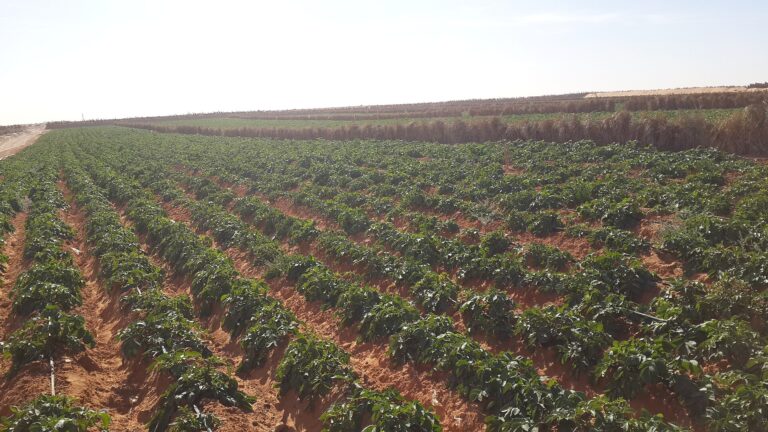
Photo: Potato harvest in Sokh, Uzbekistan (illustrative). Shoh17 / Wikimedia Commons, pampublikong dominyo
Pandaigdigang Maikling Balita tungkol sa Patatas
Nangungunang limang kuwento, presyo, alerto sa sakit at mga kaganapan. Umaga ng mga araw ng linggo, walang patalastas.
Anong sunod
The government targets self-sufficiency by 2027. Full-year 2025 statistics and import data will show progress. The area discrepancy remains unexplained.
Pinagmumulan ng
- Zamin.uz (Государственный комитет по статистике), 07.11.2025 — https://zamin.uz/en/uzbekistan/167771-where-was-the-most-potato-grown-in-uzbekistan-in-2025.html
- FAOSTAT sa pamamagitan ng Our World in Data, Produksyon ng Patatas — https://ourworldindata.org/grapher/potato-production
- FAOSTAT sa pamamagitan ng Our World in Data, Mga ani ng patatas — https://ourworldindata.org/grapher/potato-yields
- FreshPlaza (Spot.uz), 04.02.2025 — https://www.freshplaza.com/asia/article/9701647/why-potato-prices-have-risen-in-uzbekistan-and-when-to-expect-a-decrease/
- The Times of Central Asia, 31.01.2025 — https://timesca.com/uzbekistan-aims-for-self-sufficiency-in-potato-production-by-2027/
- 24.kg — https://24.kg/english/320973_100000_tons_of_potatoes_exported_to_Uzbekistan_in_2024/
- ОДИН ИСТОЧНИК
Naka-link sa materyal na ito
- bansa
- Uzbekistan
- Technologies
- in-vitro seed production
Kaugnay na mga kuwento

Peru: Dumoble ang Produksyon ng Patatas sa 6.58 Milyong Tonelada Simula noong 2000 Dahil Umabot sa 19.5 tonelada/ha ang Ani
Bolivia: Umabot na sa 1.38 Milyong Tonelada ang Ani ng Patatas ngunit Nanatiling Malapit sa 6.5 tonelada/ha ang Ani